Key Takeaways
After bankruptcy, the repair-or-replace decision should be based on real costs, not fear. Repairs, towing, missed work, rentals, and breakdowns can make an old car more expensive than replacement. NABS helps clients explore reliable late-model vehicle options, often zero down, with online coordination, electronic documents, delivery, and nationwide support available.
FAQ
What does “repair or replace car after bankruptcy” mean?
It means comparing the real cost of keeping an old vehicle against the cost of replacing it with more reliable transportation. After bankruptcy, the decision should include repair bills, towing, missed work, rental cars, insurance, reliability, income needs, and whether the vehicle still supports daily life.
When does repairing an old car still make sense after bankruptcy?
Repairing still makes sense when the vehicle is mostly reliable, the repair is clearly defined, the cost is manageable, and the car can realistically continue supporting work, family, and daily transportation. A paid-off vehicle with reasonable maintenance needs can still protect the budget.
When does replacing the old car become the smarter move?
Replacement becomes smarter when the old car repeatedly breaks down, drains money through repairs, causes missed work, creates towing or rental costs, or threatens income and household stability. If repairs have become a pattern instead of an occasional expense, the old car may be the expensive choice.
Why can a paid-off car still be expensive?
A paid-off car can still be expensive if it keeps requiring major repairs, causes transportation disruptions, or creates emergency costs. No monthly payment does not automatically mean the vehicle is affordable. The true cost includes repairs, downtime, stress, missed work, and reliability risk.
How can NABS help someone in bankruptcy replace an unreliable vehicle?
NABS helps bankruptcy clients pursue late-model, low-mileage vehicle options through an online brokerage process. Clients can apply online, work with a coordinator, review available cars, trucks, vans, or SUVs, complete documents electronically, and have the vehicle delivered.
Can NABS help with an auto loan after bankruptcy?
Yes. NABS helps people who have filed or are filing bankruptcy pursue vehicle financing options. Approval depends on income, lender requirements, budget, bankruptcy status, and vehicle selection, but NABS is built to help clients navigate the process from start to finish.
Does NABS offer zero-down vehicle options?
NABS often helps bankruptcy clients pursue zero-down vehicle options, depending on qualifications, lender requirements, income, budget, and vehicle selection. Zero down is not the only factor, though. The right vehicle must still be reliable, affordable, and appropriate for the client’s real situation.
What should I calculate before deciding to repair or replace my car?
Calculate recent repairs, upcoming repairs, towing, rental cars, rideshare costs, missed work, insurance, fuel, maintenance, and reliability problems. Then compare those costs against a realistically structured replacement vehicle. The decision should be based on total transportation cost, not just the absence of a car payment.
Is replacing a car after bankruptcy financially irresponsible?
Not always. Replacing a car after bankruptcy can be responsible when the old vehicle is unreliable and costing more than it provides in stability. The key is avoiding a bad loan, choosing a practical vehicle, and using a process that supports recovery rather than creating another financial problem.
What is the main lesson of the article?
The main lesson is that fear should not control the repair-or-replace decision after bankruptcy. Keeping an old car can be smart, but only if it remains dependable and affordable. If it keeps punishing the budget, a reliable replacement through NABS may be the cleaner path forward.
——————–
I don’t think people talk honestly enough about the old car after bankruptcy. They talk about fear. They talk about credit. They talk about the shame of financing again. Fine. All of that is real. But they don’t talk enough about the other side of the decision, which is this: sometimes the vehicle you’re clinging to because you’re afraid of debt is already charging you every month through repairs, towing, missed work, rental cars, late arrivals, stress, and the quiet little humiliation of wondering whether it’s going to start tomorrow. That’s why the repair or replace car question matters so much after bankruptcy.
Here’s the thing, I understand the fear. Bankruptcy makes people cautious, and honestly, caution is not the enemy. Caution can save you from a stupid deal. Caution can keep you from rushing into the wrong auto loan after bankruptcy just because somebody with a desk and a finance form says, “We can get you done.” But caution can also rot into paralysis. And when the old car is unreliable, paralysis is expensive.
I’m not saying every bankruptcy buyer needs to replace a vehicle the second it makes a weird noise. That would be ridiculous. I’m saying the decision needs a sober audit, not emotional punishment. If the old car is still dependable, manageable, and affordable to maintain, keep it. Great. Drive it. Protect the budget. But if the old vehicle has turned into a monthly repair subscription with surprise breakdowns, then pretending you’re being financially responsible may be the most expensive part of the whole mess.
And yes, I know how ugly that sounds when money is already tight.
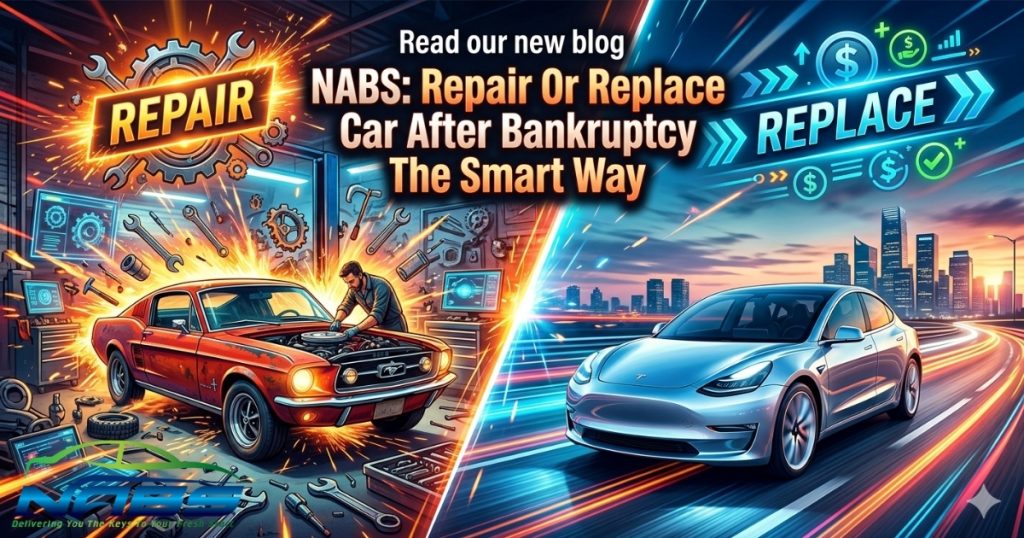
Repair Or Replace Car After Bankruptcy Is Not A Pride Question
I’ve watched people treat an old car like a test of character. If they can keep it alive, they feel disciplined. If they finance something else, they feel like they failed. I get the psychology, but I don’t trust it. A dead transmission doesn’t care about your character. A failing alternator doesn’t admire your grit. A car that strands you outside work at 6:40 a.m. isn’t helping your recovery because you were “responsible” enough not to finance anything.
Look, the question isn’t, “Can I suffer through this vehicle longer?” The question is, “Is this vehicle still protecting my income, schedule, family, and recovery?”
That’s different.
The repair or replace car decision after bankruptcy should come down to real numbers and real use. How often is the vehicle in the shop? How much did you spend in the last six months? How much work did you miss? How many times did you pay for towing, rides, rentals, or last-minute help? How much would the next major repair cost compared with a properly structured replacement? If the answer is “I don’t know,” then you’re not making a decision yet. You’re just reacting.
Because an old car can look cheap while quietly behaving like a finance company with oil stains.
Car Repair Costs Are Not Background Noise Anymore
Car repair costs have changed the math. Labor isn’t cheap. Parts aren’t always cheap. Diagnostics aren’t cheap. Modern vehicles are more complicated, and even older vehicles can become expensive when the repair list stops being occasional and starts becoming a personality trait.
According to a 2026 AAA article, “The average mechanic labor rate is variable across the country, from less than $100 to over $200 per hour.” The same AAA article states, “Almost half of all auto repair shops price their labor between $120 and $159 per hour.” That matters after bankruptcy because one bad diagnostic trail can become a serious budget event before the vehicle is even fixed.
And when you’re rebuilding, there is no such thing as “just a repair.” A $900 repair can become a missed rent payment. A $1,400 repair can become a credit-card relapse. A $2,500 repair can become the reason somebody starts Googling loan options at midnight with a level of desperation no lender should be allowed to see.
Honestly, I’ve had that moment with a vehicle where the mechanic explained the repair using a very calm voice = Bad news. One thing had failed, another thing was weak, and the estimate kept growing in my head even after he stopped talking. I remember sitting in the parking lot doing the math, not dramatically, just tired. Repair it and hope? Replace it and risk a payment? Wait and risk being stranded? That kind of decision doesn’t feel financial in the moment. It feels physical. It sits in your chest.
That’s why I don’t judge people for being afraid of financing after bankruptcy. I just don’t want that fear making the decision by itself.
The Old Car Can Become The Expensive Choice
There’s a point where keeping the old vehicle stops being thrift and starts being denial. Actually, let me rephrase that: it starts as thrift, then slowly turns into denial while you’re too busy getting to work to notice.
The old car becomes the expensive choice when repairs are no longer isolated. A battery is one thing. Tires are one thing. Brakes are one thing. But when the vehicle needs tires, brakes, suspension work, a sensor, an oil leak repair, and it still has a transmission that shifts like it’s making a private decision, you have to stop calling it “saving money.” You may just be spreading the cost of replacement across breakdowns.
According to an updated April 2026 AAA article, “Unexpected repairs—such as alternator failures (500–1,000), battery replacements (75–200, plus labor) and transmission replacements (2,500–6,000)—can be harder to plan for but are manageable with a dedicated emergency fund.” That quote is polite. Real life is not always polite. A bankruptcy buyer may not have a dedicated emergency fund sitting there like a obedient little employee waiting to perform.
That’s where the math gets nasty. If you don’t have the emergency fund, the repair becomes debt, delay, or disruption. Debt because the card gets used. Delay because the repair waits while the vehicle gets worse. Disruption because the car fails and now the job, the kids, the medical appointment, or the court date has to work around the vehicle’s mood.
So when someone asks whether they should repair or replace car after bankruptcy, I don’t start with shame. I start with the pattern. One repair can be normal. A pattern is evidence.
Reliable Car After Bankruptcy Does Not Mean Fancy
I want to be clear because this is where people get defensive. A reliable car after bankruptcy does not mean a luxury vehicle. It does not mean “reward yourself” financing. It does not mean buying more vehicle than the budget can carry because the last few years were rough and you want something that feels like a comeback.
No. Bad idea.
A reliable car after bankruptcy means transportation that starts, fits the household, supports income, and doesn’t require the owner to live in a permanent state of mechanical suspense. It can be a sedan, minivan, SUV, or truck. It depends on the borrower’s actual life. NABS helps bankruptcy clients pursue late-model, low-mileage vehicle options through an online brokerage process, with coordinator support, electronic documents, and delivery. That matters because the goal isn’t “more car.” The goal is the right amount of dependable transportation.
That being said, “reliable” also can’t mean “the cheapest thing that technically moves.” I’ve seen that mistake, too. A person gets scared of a payment, so they pour money into a vehicle that can’t realistically handle the commute anymore. Or they buy an old problem because it feels safer than financing. Then the repair bills start showing up like bad punctuation in every month’s budget.
The point is not to avoid every auto loan after bankruptcy. The point is to avoid a bad one.
Are You Ready to Find Out More?
Why NABS Fits This Repair Or Replace Decision
NABS is relevant in this conversation because the company is built for people who are in or around bankruptcy and still need transportation. The process is online. Clients can apply, work with a coordinator, review vehicle options, handle documents electronically, and have a vehicle delivered. NABS works with categories that include cars, trucks, vans, and SUVs, which matters because the right replacement should match the borrower’s life, not just whatever a local lot wants to unload.
But I don’t want to oversell this like a brochure. A replacement vehicle still has to make sense. Income matters. Budget matters. Vehicle selection matters. Down payment requirements can vary. Lender requirements matter. If Chapter 13 is involved, the case structure and approval process may matter. NABS can help coordinate a cleaner path, but the borrower still has to be honest about what they can carry.
And that’s good. Honesty is the whole point.
The wrong replacement is not better than the old car. It’s just a newer mistake. But the right replacement can stop the repair bleeding, protect the commute, stabilize the household schedule, and give the buyer a practical way to move forward without waiting for the old vehicle to fail at the worst possible time.
Objection: ‘I’m Afraid To Finance Again’
I believe you. I’d be more worried if you weren’t cautious. Bankruptcy should make a person more careful. It should make them read, ask, compare, and slow down. That’s not weakness. That’s the financial nervous system doing its job.
But fear can’t be the only voice in the room. If the old car is costing hundreds every month in repairs, causing missed work, and making daily life unstable, refusing to consider financing may not be discipline anymore. It may be fear dressed like discipline because it found a better outfit.
So what should you do? Start with numbers. Not feelings. Not dealership pressure. Not the little guilt lecture playing in your head. Add up the last year of repairs. Include towing. Include rentals. Include rideshare. Include missed work if you can estimate it. Include the next known repair. Then compare that against a realistic payment on a reliable car after bankruptcy, including insurance and maintenance.
Is replacement always smarter? No. Sometimes repair wins. If the vehicle is paid off, the repair is manageable, and the car still has a solid future, keeping it may be the better move. But if the repair estimate is just the next page in a long, expensive book, you need to admit what you’re reading.
Objection: ‘The Car Is Paid Off’
Paid off is good. Paid off is not magic.
A paid-off vehicle with minor maintenance needs can be a gift after bankruptcy. No argument there. But a paid-off vehicle that can’t stay on the road is not free transportation. It’s a cost center with sentimental value. If it’s draining cash, threatening income, and creating emergencies, the absence of a car payment doesn’t automatically make it the cheaper choice.
This is where people lie to themselves a little. They say, “At least I don’t have a payment,” while paying the mechanic, the tow company, the rideshare app, the rental counter, and maybe the employer through lost hours. I’m not mocking that. I’m saying the math has to include all of it.
According to that updated April 2026 AAA article, “With a little planning and by setting aside money on a consistent schedule, you can avoid blowing your personal budget on routine car maintenance and (especially) unplanned repairs.” That’s solid advice. But after bankruptcy, many people are still trying to build the cushion that makes that advice easy to follow. If the vehicle is already burning through the cushion before it exists, that’s a problem.
Objection: ‘I Don’t Want Another Bad Loan’
Good. Don’t get one.
That sounds blunt because it should. Avoiding another bad loan does not mean avoiding every possible replacement vehicle. It means using a better process, asking better questions, and not letting urgency make decisions that belong to math.
An auto loan after bankruptcy should be judged by whether the structure fits the borrower’s real life. Can the payment survive normal monthly pressure? Is the vehicle likely to be dependable? Does it fit the commute, job, and family? Are the documents clear? Does the process make sense? Is the buyer being guided through the situation or shoved toward a quick signature?
NABS helps clients pursue financing and vehicle options with coordinator support from start to finish. Often, bankruptcy clients may have access to zero-down possibilities depending on qualifications, income, lender requirements, and vehicle selection. That can matter, especially when repair bills have already eaten up cash. But zero down is not the whole story. The whole story is whether the deal helps stabilize transportation without creating the next financial bruise.
Now that I think about it, the best replacement vehicle after bankruptcy is not really a car decision. It’s a continuity decision. Can you keep working? Can you keep parenting? Can you keep getting to appointments? Can you keep the budget from getting ambushed every time the dashboard lights up?
When Repair Still Makes Sense
I’m not writing this to scare people into replacing a vehicle that can be saved. Repair can absolutely make sense. If the vehicle has a known history, the mileage is reasonable, the repair is contained, and the mechanic can explain why the fix should give the vehicle meaningful life, repairing may be the better financial move.
A good repair decision has boundaries. The estimate is clear. The repair solves a defined problem. The vehicle isn’t stacked with other known failures. The owner can pay for it without wrecking the rest of the budget. The car still fits the household. It can get to work. It can handle the family. It can be trusted.
But when every repair is followed by another repair, and every “final fix” somehow has a sequel, it’s time to stop pretending the vehicle is stable. It may still be familiar. Familiar is not the same thing as dependable.
That’s the moment the repair or replace car conversation becomes serious. Not emotional. Serious.
When Replacement Becomes The Adult Decision
Replacement becomes the adult decision when the old vehicle threatens the very income and stability bankruptcy is supposed to protect. If someone needs transportation to keep a job, comply with family obligations, get children to school, attend medical appointments, or maintain a normal life, then reliability is not a luxury. It’s infrastructure.
I don’t care how modest the vehicle is. I care whether it works.
A properly structured replacement through a bankruptcy-aware process can make sense when the old vehicle’s repair pattern is no longer manageable. NABS helps clients who have filed or are filing bankruptcy look for late-model, low-mileage options that fit the situation, then coordinates the steps behind the scenes. That kind of process matters because replacing the car should not mean walking into a high-pressure finance office while anxious, embarrassed, and tired.
The old car already created enough drama. The replacement process shouldn’t add more.
The Real Question Is What The Vehicle Is Costing You
The repair or replace car decision after bankruptcy should never be based on pride, shame, or panic. It should be based on what the old vehicle is truly costing and what a replacement would realistically require. Not fantasy math. Real math. Repairs, towing, missed work, rentals, insurance, payment, fuel, maintenance, and risk.
Here’s the thing: keeping an old car can be smart. Replacing an old car can be smart. The dumb move is refusing to measure the difference because the answer might make you uncomfortable.
If the old vehicle is still stable, maintain it and keep breathing. If it’s bleeding money and threatening your recovery, stop calling it cheap. Start looking at whether a reliable car after bankruptcy through a structured process makes more sense than waiting for the next failure. NABS can help bankruptcy buyers explore that path without turning the decision into a dealership guessing game.
NABS belongs in that decision because it isn’t a traditional dealership and it isn’t asking bankruptcy buyers to beg their way through a showroom. It’s a nationwide auto brokerage built around helping people in Chapter 7, Chapter 13, or post-filing recovery find a workable path to dependable transportation. Instead of making the borrower hunt from lot to lot while half-explaining their financial life to strangers, NABS helps organize the financing conversation, matches the request to available vehicle options through its network, coordinates the approval steps, and keeps the process moving toward a car, truck, van, or SUV that fits the buyer’s actual situation. I like that distinction because it changes the power dynamic. The client isn’t just reacting to a broken vehicle anymore; they’re using a process designed for the reality they’re already living.
You don’t need more car than your life requires, but you do need transportation that doesn’t keep punishing you for trying to move forward.
So be honest: is your old car saving you money, or is it just charging you in ways you’ve stopped counting? Apply online. Get approved. Take delivery. Visit https://nabsus.com/ or call 888‑335‑1498 to start the process of getting approved, selecting a quality car, and rebuilding your credit with confidence.